Deep Litter Chicken Coop Bedding
Introduction
Deep litter chicken coop bedding is a method that requires very little daily maintenance. However, there can be a few drawbacks for the backyard chicken coop.

Why Deep Litter Works
Microorganisms in deep litter chicken coop bedding break down manure and bedding. It will take about 120 days for it to become useful compost (link for reference).
How To
I prefer starting with a layer of pine shavings spread 2-3 inches thick. Turn areas that the chickens don’t scratch in with a pitch fork or shovel before adding new bedding. I add more bedding to areas as I notice droppings deposit, or moisture. For my flock, it’s about every 1 to 3 weeks. Additional layers vary based on what I have:
- Straw
- Hay (not recommended due to low carbon content but sometimes it’s all I have and when mixed in seems to work fine in my coop)
- Chopped Dry Cornstalks
- Dry Pea Vines
- Cardboard
- Pine Shavings
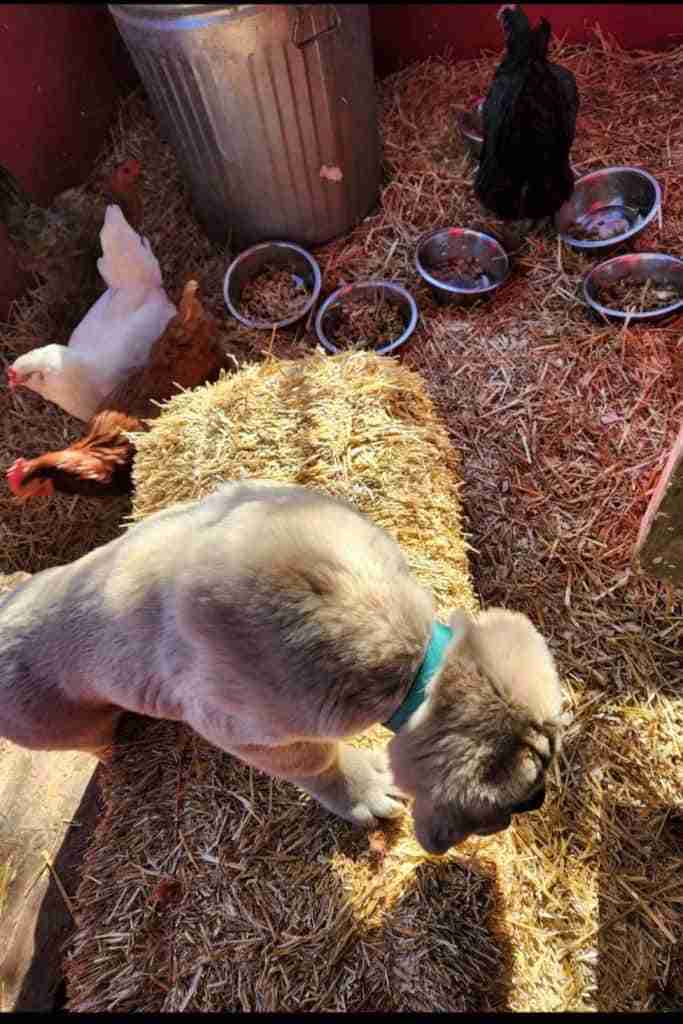
Litter should stay fairly dry. When water gets spilled, you get driving rain, a leak, some sort of substantial amount of water comes in I’ll just scoop out the wet, fill in with the surrounding bedding, and add a new top layer if needed. If it’s not noticed, it will dry in hard layers on the floor.
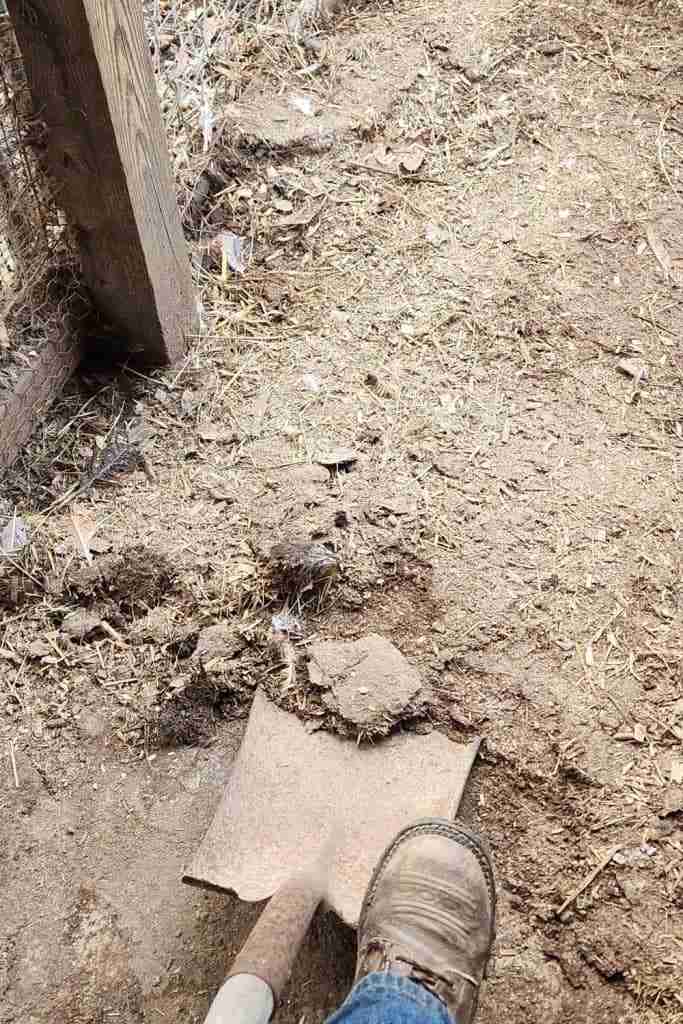
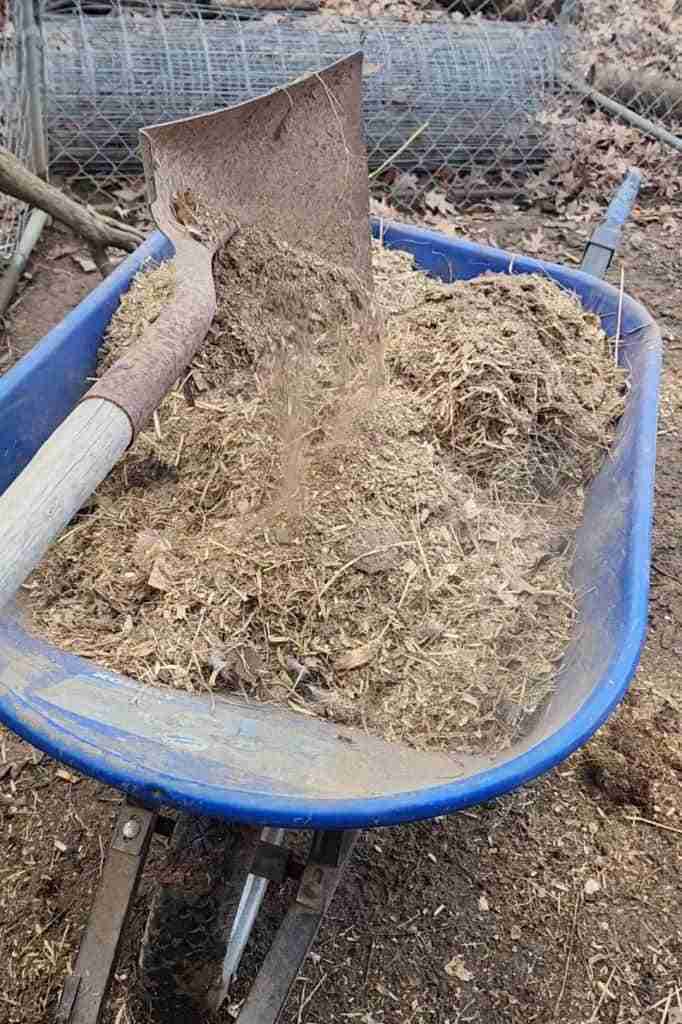
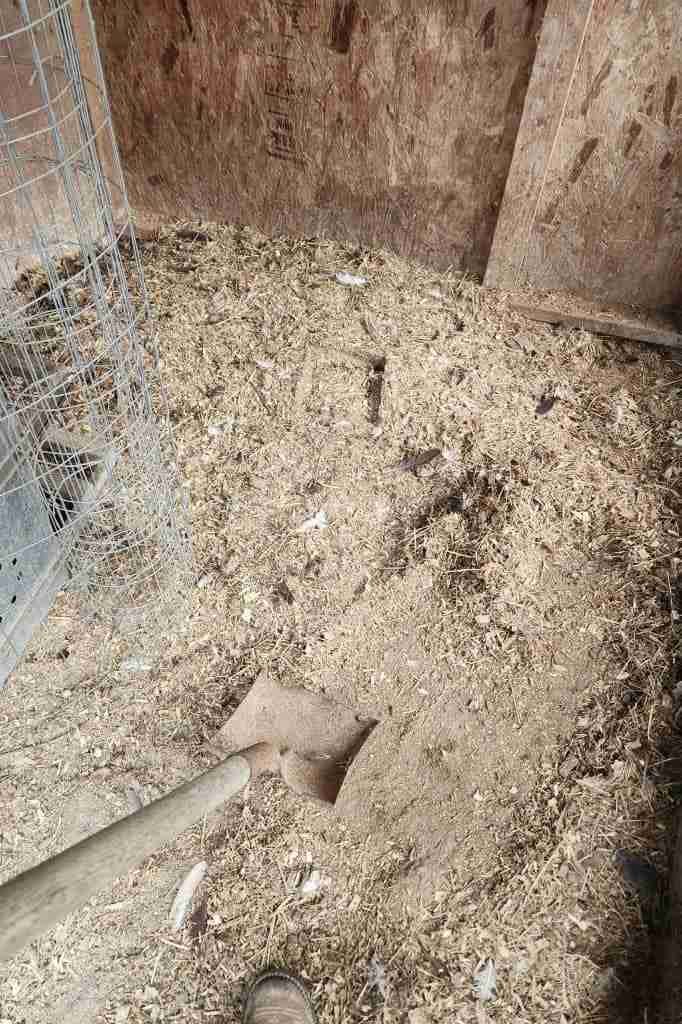
I do a complete clean out once or twice a year. A Shovel and wheelbarrow are my main tools, but at the end I sweep out the best I can before attacking the never-ending cobwebs above.
Benefits of Deep Litter Bedding
- Ready to use compost that is more nutrient dense (link for reference)
- Less daily/weekly maintenance
- Warmer in the winter months
Disadvantages of Deep Litter Bedding
- Cleaning out takes longer
- More difficult to keep drinking water clean (link to what I use to help with this problem)
- Is not “pretty”
- Not always practical for very small or mobile coops
Conclusion
Deep litter chicken coop bedding can be a great option for the backyard chicken coop. For me, the benefits outweigh the drawbacks.
What are you using in your coop? Leave a comment!